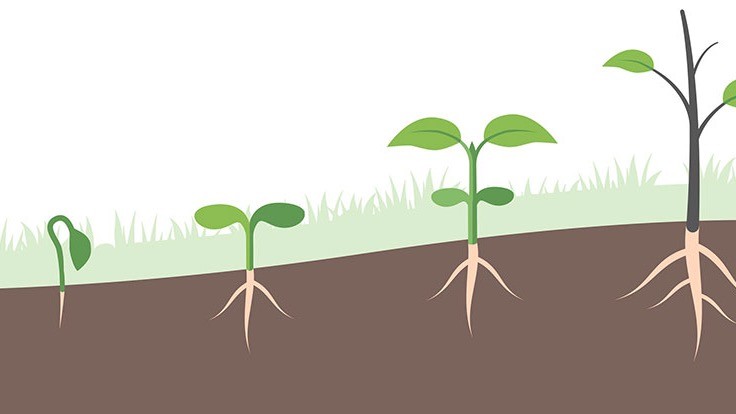
Stage One: Learn
Post-layoff.
It starts small.
Your kitchen table. Early. The clock ticking against the far wall. Your laptop is open, calendar blank in a way that feels reckless. Vapor from your hot coffee lifts into the sunlight pouring through the window.
The cat jumps up, misjudges the chair, corrects, then settles into your lap, purring.
All is good in the world.
For the cat.
What the hell am I doing?
The job is gone. That part is real now. You swore you’d never go back in. Too painful. Too much stress. Full-time work doesn’t feel right anymore.
Yesterday you said the words out loud—I’m going fractional—into the mirror.
Today, and every day forward, you have to say them to other people.
What the hell does that even mean?
Corporate reflexes kick in. You get busy.
Emails. LinkedIn rewrites. A contract and an MSA for a client who doesn’t exist yet.
It’s painful work.
You hear that your life is now supposed to be about networking and selling yourself, and you shudder at the idea.
In the job, people came to you. Opportunities came to you. Responsibility came to you. A paycheck came to you.
Now you have to go get it.
You decide to stand up a website. Then rewrite it. Then rewrite your profile. Then the contract. Then the MSA again. Write and rewrite.
This is progress, right?
In your mind, you’re laying the foundation of your own business. But mostly it’s still happening in your head. After all—what do you really know about this fractional thing?
Weeks in—maybe longer—you realize you need a way to understand the shape of this new work.
Isn’t there supposed to be some kind of map here?
Voyageur U, or something like it, appears.
Ahh. Orientation.
A way to name the terrain ahead.
Relief.
You’re in a Zoom room with people who look like you feel. Hopeful. Scared. Determined. Excited. Tenuous.
The instructor talks about Corporate You versus Fractional You. About borrowed confidence versus earned confidence. About how the title and the team and the logo gave you permission to be good at what you do—and how you now have to learn to stand firm without any of that.
And how you can.
It lands.
You take notes. Real notes. Not the kind you took in meetings while thinking about other things. These notes matter. They carry weight.
The workbook arrives. You pop into the community. You find templates in the AI tool.
Your future starts taking shape right in front of you.
Oh. So that’s how this works.
There’s a path now.
Not easy. Not guaranteed. But a path.
You stop rewriting your website for the fourth time. You start doing the exercises. You work on yourself. You begin to understand the value of your wisdom—something often sidelined in corporate, now your most treasured asset.
You’re learning fast.
Forward progress isn’t random anymore.
Stage Two: Clients
Week four of the class.
You’re mid-lesson when a calendar notification pops up.
A meeting.
With a real company.
A referral from someone in your class—someone you clicked with.
You almost cancel.
You’re not ready for this. You haven’t finished your value work. You don’t have all the templates done.
You take the meeting anyway.
You have to. Ready or not.
The call starts. You’re nervous. After the niceties—which turn out to be less awkward than you feared—they describe a problem.
You listen. You ask a few questions. You remember something from class about listening for pain, not scope.
And then you hear it.
The real issue underneath the stated one.
Shit.
You’ve seen this before.
Like… a thousand times.
They ask for a contract.
You hang up and just sit there.
You grin.
The cat looks at you. You look at the cat.
Holy shit. This is real.
The work begins while you’re still in class. Momentum has started.
Money hits your account.
Not a paycheck. Not benefits. Just money for work you did.
Good money.
It feels strange. Then it feels normal. Then it feels good.
Your calendar starts to fill.
Another client. Different companies. Different industries. Different problems.
Same pattern.
They’re stuck. You help them get unstuck. You’re relief, not overhead. You stick around to keep them from slipping back into stuck.
Months pass.
You start to notice you changing.
The work sharpens you. Every engagement teaches you. You see patterns across companies—the same blind spots, the same mistakes, the same opportunities missed.
You get faster. Sharper.
You know which question to ask in the first ten minutes that saves everyone three weeks of wandering.
Your calendar has weight now.
Not full.
But full enough.
You’re making money. Real money.
And the work matters.
Stage Three: People
Along the way, people appear.
Not clients. Not prospects.
People like you.
Other fractionals. Specialists. Independent minds who stepped out of the same machinery you did.
You meet them in the community. In Slack threads. On Zoom calls. At coffee shops.
It turns out there is a whole world of thoughtful, generous, capable people not stuck in offices.
You start going deep with a few people instead of shallow with hundreds—which is what you thought this would require.
Someone asks a pricing question. You jump in. Someone has a referral for you. You have one for them.
An ecosystem takes shape.
You notice you’re helping others proactively.
When did that start?
This is what a mastermind actually is. Not a formal group with rules and agendas. Just aligned minds creating lift.
One battery works fine.
Two together generate something else entirely.
Someone admits in the group chat they’re scared they made a mistake leaving corporate.
Three people respond in minutes.
Me too. Still am sometimes. That’s the job. You’re doing fine.
These people get it. They chose this. They understand what it costs—and what it gives back.
You’re not alone at the kitchen table anymore.
Or in your head.
You grin again at your little table. The cat pads across the floor—indifferent, but somehow… aware.
Stage Four: Balance
A year in.
Time moves differently now.
Tuesday. 10 a.m. You’re at the gym.
Not 5:30 before work like the old days. Not squeezed into lunch.
Just… when you want to go.
You lift. You run. You sweat. Your muscles burn—the good burn. The burn that means your body is doing something other than sitting in chairs all day.
You rack the weight. Breathe.
Your body feels awake.
So does your mind.
Spring arrives.
Your daughter has a game. Rain comes down sideways. Parents huddle under umbrellas that don’t help. Your shoes soak through.
She looks over, finds you, and grins.
You stay the whole game.
You have nowhere else you need to be.
Clients are good. Money is in the bank. Life is good.
You used to miss these. A lot. Client meetings. Work trips. Something “urgent.”
Not anymore.
You’re here.
The corporate world said work comes first. Life happens later—in the margins.
The fractional world says something else.
You have routines now.
Not corporate routines.
Yours.
Health routines. Relationship routines. Community routines. Work routines.
Work is part of your life now.
Not the thing your life happens around.
Stage Five: Development
Something shifts again.
You start reading differently. Not to stay current—but because you’re pulled.
Philosophy. Economics. The history of work. How people have always tried to figure out how to live.
You write things down.
You have a blog now.
Who knew?
You’re in constant observation mode, and you like it. Ideas. Patterns. Connections.
An email arrives.
Would you speak at a conference?
You almost say no.
Then you say yes.
Another email.
Would you mentor someone just starting out as a fractional?
You meet for coffee. Virtual coffee. They’re where you were two years ago. Scared. Excited. Lost.
You hear yourself talking and realize you sound like someone who knows what they’re doing.
Because you do.
A college calls. They want you to teach a class.
Not theory. Not textbooks.
Judgment.
You hang up and sit there.
The cat jumps into your lap and starts making biscuits.
The old world said: build your career, peak at 55, retire, coast.
This world says: you’re just getting interesting.
Life is just getting interesting.
You don’t want to stop. You don’t want to coast. You don’t want to be done.
You want to develop. Explore. Sharpen. Share what you know with people who need it.
The question changes.
Not When can I retire?
Just:
What’s next?
Your hand finds the soft place behind the cat’s ear. She purrs and drifts into sleep.
Go Fractional,
John